


Virta Health
4.5484.00 Reviews
App Specs
- Version
- 3.30.1
- Updated On
- License
- Free
- Downloads
- 100,000+
- Developer
- Virta Health
- Categories
- Medical
- Platform
- Android
Screenshots

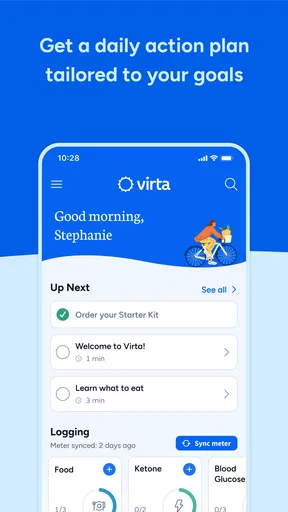
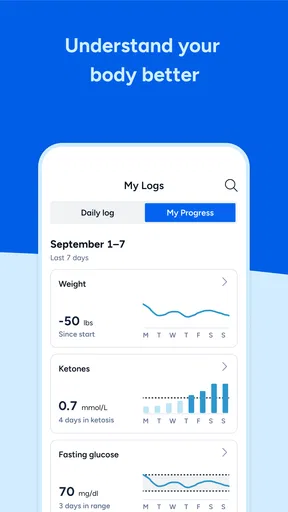
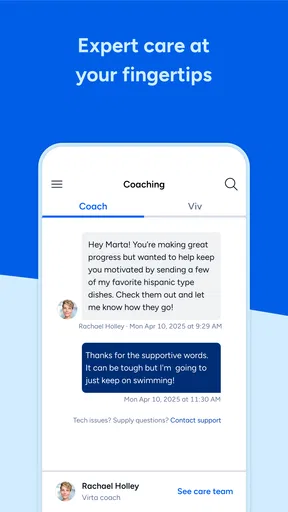


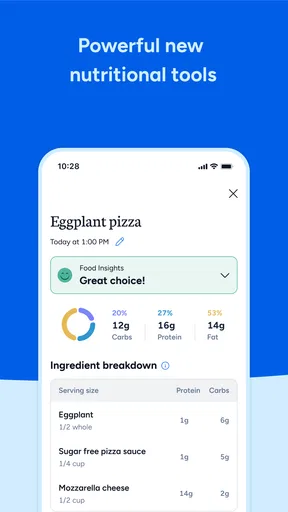
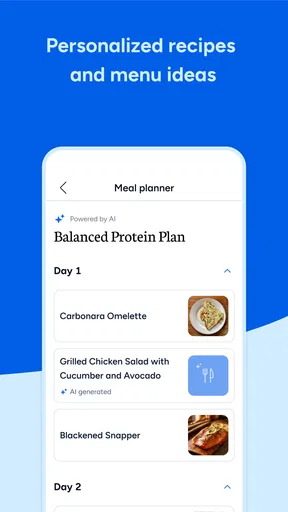
 Analysis by AppCompare
Virta Health is the kind of medical app I would approach as part of a guided health program rather than as a casual calorie counter. Developed by Virta Health, it focuses on helping people work toward weight loss and better diabetes management, with the store summary presenting that goal in very direct terms. My overall impression is that its value depends less on flashy app mechanics and more on whether you are ready to use a digital service consistently alongside professional guidance.
The app is free to download, is rated for Everyone, and has built a sizeable audience with over one hundred thousand installs. Its average score sits at 4.5 from around one thousand ratings, with hundreds of written reviews behind that score. Those figures suggest that many users find the experience worthwhile, although they should not be mistaken for a guarantee that the program will suit every medical situation or personal routine.
What using Virta Health feels like day to day
I’d use this section to focus on the small habits that make a medical app genuinely useful: choosing a calm moment to check in, recording details while they’re fresh, and leaving enough time to review what you’ve entered. That routine can make health information easier to discuss later, without turning every meal or reading into a judgment.
A focused medical companion rather than a general wellness tracker
What stood out to me is the app’s narrow purpose. Many health apps try to cover exercise, sleep, recipes, mood, hydration, and a long list of lifestyle goals. Virta Health is more clearly aimed at people dealing with diabetes-related weight and health goals. That focus can be reassuring when you do not want to sort through a maze of unrelated dashboards.
I would think of it as a place to stay connected with a structured care journey. The useful question is not simply whether it counts something or displays a trend. It is whether opening the app helps you make better decisions between appointments, keep track of what your care team needs to know, and remain engaged when progress is uneven.
The strongest benefit is continuity, not entertainment. If you want badges, social challenges, or a broad fitness community, this is probably not the app I would choose first. If your priority is a more health-specific routine, its focused design is easier to understand than a large lifestyle platform that treats diabetes as just one option among many.
Speed expectations when you open the app
Virta Health’s current version is 3.30.1, and it supports devices running Android 9 or later. In ordinary use, I would expect the basic experience to feel reasonably direct on a modern phone: opening a medical companion, checking the day’s information, and recording what matters should not require the visual complexity of a social network or a game.
Worth Reading Before You Choose

EA SPORTS FC Mobile 26 Is a Bigger Football Game, but It Takes Time

Flipboard Shows What News Apps Must Do Beyond the Feed

Switching to Android Auto Means Rethinking Your Driving Routine

Google Calendar Makes a Crowded Week Easier to Manage

Ludo King Makes the Most of the Minutes Between Plans

Baby Panda World Brings Quick Play to Modern Phones, but Its Game Library Feels Busy
That said, speed in a health app is not only about launch time. A screen can appear quickly while the meaningful part of the experience depends on syncing information, loading messages, or waiting for a response from the service. Those moments are naturally more sensitive to connection quality and to how busy the service is. I would judge the app by whether it gets me to the next useful action without unnecessary wandering.
On an older supported phone, transitions may feel less immediate than they do on a recent device, especially if the handset is short on storage or already working hard in the background. That is not unique to Virta Health, but it matters more in a routine app because friction can make people postpone a check-in. Keeping the operating system current within the supported range and leaving some free storage are simple ways to avoid avoidable sluggishness.
What happens during heavier use
The busiest moments are likely to be the ones when you are doing more than briefly checking the app. A user may be reviewing several pieces of health information, writing a detailed update, responding to guidance, or returning after a difficult day and trying to reconstruct what happened. Those sessions place more demand on both the phone and the user’s attention than a quick glance.
My practical advice is to use it at a deliberate moment rather than while rushing between tasks. A short entry made immediately after a meal or health decision can be more useful than trying to remember everything late at night. This is one of the less obvious trade-offs with a medically focused app: the app may be quick, but the quality of what you put into it depends on giving yourself enough time to be accurate.
If you regularly use several demanding apps at once, switch between video calls, or keep many browser tabs open, the phone may need a moment to restore Virta Health when you return to it. Closing unnecessary apps can help, but I would not expect a health tracker to transform an aging phone into a fast one. The more important test is whether your information remains available after interruptions and whether returning to the task feels predictable.
A realistic everyday scenario
Imagine starting the morning with a busy schedule and little time for a long health review. I would use Virta Health for a brief check-in, then return after lunch when I had a clearer idea of how the day was going. Rather than treating one reading or one meal as a pass-or-fail result, I would use the record to create a more complete picture for the people supporting my care.
In the evening, I might look back at the day and add context while it was still fresh. The value of that workflow is not that the app magically fixes a difficult day. It is that a difficult day becomes information that can be discussed and acted on instead of a vague memory. For someone trying to build a sustainable diabetes routine, that feedback loop can be more useful than a generic wellness score.
This approach also explains why I would not recommend waiting until the end of the week to use the app. Delayed entries are easier to forget, and they lose the small details that help explain why a day went well or poorly. Consistent, brief use is likely to be more manageable than occasional, exhaustive sessions.
Reliability and the trust factor
Reliability matters differently in a medical app than it does in a casual fitness tool. If a music app pauses, it is annoying. If a health record fails to save or a communication step becomes confusing, the consequences can feel much more serious. I would therefore pay attention to whether Virta Health behaves consistently across ordinary check-ins, interruptions, and returns to the app.
The public rating is encouraging, but a rating cannot tell me how the app will behave on my particular phone or network. It also cannot replace professional judgment. I would still keep any important medical instructions accessible through the appropriate clinical channel and avoid assuming that an app screen is a substitute for urgent care.
One useful habit is to confirm that an entry or message has completed before closing the app, particularly when the connection is weak. This is not a criticism unique to Virta Health; it is sensible behavior for any service that sends information online. If a screen seems slow, I would wait for a clear completion state rather than repeatedly tapping, which can create duplicate actions or make it harder to know what was actually submitted.
Recovery after an interruption is another important test. A phone call, low battery, or accidental swipe should not force you to abandon a carefully prepared update. I would be more comfortable with the app if returning to it takes me back to a recognizable place and preserves work that was already completed. When a service does not recover cleanly, the best workaround is to break longer updates into smaller steps and submit them as you go.
Device constraints and practical setup
The minimum operating system is Android 9, so anyone using an older phone should check compatibility before building a routine around the app. That requirement is modest by current standards, but it still excludes devices that have not received recent system updates. On iOS, the sensible approach is to check the current store requirements for the specific device before downloading, since compatibility can vary by platform.
Storage and battery are worth considering even though I would not describe this as a resource-heavy entertainment app. Medical apps often become part of a daily habit, which means they need to remain easy to open and update. A phone with almost no free storage can behave unpredictably, and aggressive battery-saving settings may delay background activity or notifications in some apps. I would review those settings if timely communication is important to me.
Privacy is also a practical device issue. I would use a passcode or biometric lock on the phone, avoid leaving health information visible on a shared screen, and be careful when using a public network. Those are general precautions, but they matter more here because the app’s purpose is personal medical management. A shared family tablet may be convenient, yet it requires extra attention to which account is active and who can see the display.
People with limited vision, reduced dexterity, or difficulty reading small text should test the app in their normal environment rather than assuming every screen will be comfortable. Increasing system text size, using accessibility features, and choosing a device with a larger display can make a meaningful difference. If the interface remains difficult to use, a browser-based or clinician-led alternative may be more practical than forcing the app into a routine that creates frustration.
Where it fits beside usual alternatives
The usual alternatives fall into several groups. A general calorie or fitness tracker may offer more food databases, exercise charts, and social motivation. A glucose-focused tool may put more emphasis on readings and trends. A clinic portal may be better for appointments, prescriptions, and formal records. Virta Health makes the most sense when you want a diabetes-oriented program experience rather than a collection of disconnected tools.
That distinction is important. A general tracker can be excellent for someone whose main goal is training for a race or monitoring broad lifestyle habits. It may be the better choice if you want extensive exercise planning or a large community. On the other hand, a clinic portal may be preferable when your immediate need is administrative communication with a specific medical practice.
I would not use Virta Health as the only tool for every health question. Its role is more focused, and that is both its strength and its limitation. A person who wants a flexible food journal with no program structure may find it too narrow. Someone who needs emergency guidance, diagnosis, or medication changes should contact the appropriate healthcare professional instead of waiting for an app interaction.
Who is likely to benefit most
I can see the app working well for someone who wants a regular digital touchpoint for weight and diabetes goals, prefers guided support to self-directed spreadsheets, and is willing to record information honestly even when the day did not go as planned. It may also suit people who find a broad wellness app distracting and would rather have one place centered on their medical objective.
It is less convincing for a person who dislikes ongoing tracking, rarely checks messages, or expects immediate results from a download. The store summary is ambitious, but real progress still depends on the wider care plan, personal circumstances, and consistency. I would also be cautious if someone is looking for a completely independent solution with no need to engage with a structured program.
Family members helping an adult manage a condition should agree on boundaries before sharing a device or account. Support can be useful, but medical information is personal. I would prefer the user to remain in control of entries and conversations, with relatives helping only in ways that the user and care team consider appropriate.
Small workflow choices that improve the experience
My first tip would be to establish one reliable check-in time, then add shorter visits around real events rather than trying to document an entire day from memory. Linking use to an existing habit, such as a morning routine or evening wind-down, makes the app easier to remember without turning it into an all-day obligation.
Second, I would write useful context instead of vague notes. “Hard day” is less actionable than a short explanation of what changed, when the difficulty appeared, and what you tried. The point is not to produce an essay; it is to leave enough detail for a later conversation with the care team.
Third, I would treat the app as a feedback tool, not a judge. If a week looks disappointing, I would review patterns and questions rather than deleting entries or avoiding the app. That mindset protects the quality of the information and makes the service more valuable during setbacks, when support is arguably most important.
Finally, I would test my routine during a normal low-stress week before relying on it during travel or a major schedule change. Find out where the app fits, how long a typical update takes, and how the phone behaves when the connection is unreliable. This preparation reduces the chance that a technical annoyance becomes an excuse to stop using the program.
My performance verdict
Virta Health feels best suited to steady, purposeful use. I would not choose it for visual excitement or a large collection of lifestyle tools. I would choose it when the goal is to keep diabetes and weight-management work visible in everyday life and to support a more organized conversation around progress.
Its performance should be judged by practical dependability: can I open it without unnecessary friction, complete a short update, return after an interruption, and understand what I need to do next? On a compatible, reasonably maintained phone, I would expect that basic workflow to be manageable. Older hardware, limited storage, weak connectivity, and restrictive battery settings can make any connected medical service feel less responsive.
The free price lowers the barrier to trying it, and the Everyone age rating makes it broadly accessible from a store perspective. Still, accessibility does not mean universal suitability. The right user is someone whose health goals align with the program and who is prepared to participate consistently. The wrong user is someone expecting a standalone cure, a general fitness suite, or instant answers to urgent medical concerns.
My recommendation is conditional but positive: if you are entering or already following the Virta Health approach, this app appears worth keeping as part of that routine. I would install it on a supported device, protect access to the account, begin with short and accurate check-ins, and judge its usefulness over several ordinary weeks rather than after one session. For a focused medical companion, that is a more realistic measure of success than speed alone.
Pros
- Personalized diabetes care combines coaching
- education
- and clinical support.
- Remote monitoring can reduce the need for frequent in-person appointments.
- Coaches offer practical guidance on nutrition
- exercise
- and daily habits.
- The program may help eligible members build sustainable lifestyle changes.
- Digital access makes diabetes support convenient for busy users.
Cons
- Availability depends on employer
- health plan
- or program eligibility.
- Some features may require compatible glucose-monitoring devices.
- Regular engagement is needed to get meaningful results from the program.
- Coaching quality and response times may vary by care team.
- It is not intended for emergency care or replacing urgent medical advice.
FAQs for Virta Health
What is Virta Health, and who is it designed for?
Virta Health is a digital health program focused primarily on helping adults with type 2 diabetes and related metabolic conditions improve their health through nutritional guidance, health coaching, education, and ongoing monitoring. It is not a general fitness app or a simple calorie tracker. Eligibility can depend on your employer, health plan, location, and medical circumstances, so check whether the service is available to you before downloading.
How does the Virta Health program work after installation?
After creating or activating an eligible account, users typically complete health and medical information, set goals, and connect with Virta’s care team through the app. The program may include personalized nutrition recommendations, educational materials, coaching conversations, and tracking of measurements such as weight or blood glucose. The exact experience can vary based on your treatment plan, eligibility, and the devices or services provided.
Is Virta Health free to use?
Virta Health is generally not a completely open, free consumer app. Access is commonly provided through participating employers, insurers, or healthcare organizations, and coverage rules may differ considerably. Some users may have no direct cost, while others could be responsible for copayments or other expenses depending on their benefits. Before signing up, confirm eligibility, pricing, equipment coverage, and any cancellation terms with your plan.
Can Virta Health replace my doctor or diabetes medication?
No. Virta Health should be viewed as a digital support and care program rather than a replacement for your physician, emergency services, or prescribed treatment. Its care team may work with users on lifestyle changes and, when clinically appropriate, medication management, but changes should only be made under professional supervision. Contact your doctor promptly about serious symptoms, unexpected glucose readings, or urgent medical concerns.
What privacy and device permissions does Virta Health require?
Because Virta Health handles personal health information, the app may request details such as medical history, weight, blood glucose readings, nutrition data, messages, and information from connected devices. Available permissions can include notifications, camera access for scanning or uploading information, Bluetooth or health-device connectivity, and other phone features. Review the privacy policy and permission settings carefully, and only connect devices or services you are comfortable using.


